Grease Trap Cleaning Darwin: The Compliance Rules Local Food Businesses Can't Ignore
Every Darwin food business that sends greasy wastewater to sewer must keep its grease trap pumped out on a set schedule. That's usually every one to three months, with three months as the longest gap allowed unless Power and Water sets a different frequency. Skip it, and you risk blocked drains, a forced kitchen shutdown and trouble with your trade waste approval.
That's the short version. The longer version matters, because the rules around grease trap cleaning in Darwin aren't always clear to owners. Who actually sets them? How do you know your frequency? And what should you do when the trap starts showing signs of trouble between services? This guide answers each of those questions from the team at Ecotreat Solutions NT, who pump out commercial traps across the Top End every week.
Who Sets the Grease Trap Rules in Darwin?
Power and Water Corporation sets the grease trap rules for Darwin food businesses through its Trade Waste Code. Kitchen wastewater counts as trade waste, and you need a Trade Waste Discharge Permit from Power and Water to send it into the sewer (Power and Water).
Many owners assume Darwin City Council runs grease trap compliance. In practice, the council and NT Environmental Health officers care about what a failing trap causes: odours, overflows and hygiene problems in food premises. The trade waste approval itself, including your trap size and pump-out frequency, sits with Power and Water.
The framework was also refreshed recently. The NT Utilities Commission approved a new Power and Water Trade Waste Code on 28 April 2026, and it took effect on 1 July 2026 (Utilities Commission). If you haven't looked at your permit conditions in a while, now is a good time.
Regular grease trap cleaning in Darwin City keeps food businesses compliant year-round, not just in the week before an inspection.
How Often Does Grease Trap Cleaning in Darwin Need to Happen?
Power and Water requires every grease arrestor to be serviced by a licensed waste transporter at least once every three months, unless it specifies otherwise for your site. Your Trade Waste Discharge Permit lists the exact maintenance requirements for your trap (Power and Water).
Three months is the ceiling, not the target. Most kitchens we service sit somewhere between monthly and quarterly, and the right interval depends on a few things:
- Trap size versus output. A small trap behind a high-volume fryer line fills far faster than a large trap behind a café that mostly serves coffee and toast.
- Menu and cooking style. Deep-frying, grills, roasts, curries and anything with heavy sauces push more fats, oils and grease (FOG) down the drain.
- Trading hours and covers. A venue doing breakfast, lunch and dinner seven days a week loads its trap far harder than a weekday-only lunch spot.
- Kitchen habits. Scraping plates and wiping pans before washing keeps food solids and grease out of the trap and slows build-up.
Darwin's heat adds another factor that southern guidelines rarely mention. Warm conditions speed up the breakdown of food waste in the trap, which brings on odours sooner and can turn a borderline schedule into a smelly one during the build-up and wet season.
What Happens If You Don't Schedule Grease Trap Cleaning in Darwin?
An overdue trap stops doing its job. Once the grease layer and settled sludge take up too much of the tank, wastewater rushes straight through and carries FOG into the drains and sewer beyond it. From there, the problems stack up quickly.
Blockages and backups. Grease cools and hardens in pipes, narrowing them until sinks drain slowly and floor wastes start backing up. A full blockage in the middle of service can shut a kitchen for the rest of the day.
Odours and pests. Rotting food solids and grease produce strong smells that drift into dining areas and outdoor seating. They also attract cockroaches and other pests, which is the last thing you want an Environmental Health officer to find.
Compliance consequences. Missing your nominated pump-out frequency breaches your trade waste approval conditions. Under Power and Water's Trade Waste Code, ongoing breaches can see your approval suspended or your site disconnected from sewer (Trade Waste Code summary). Complaints about smells or overflows can also bring council or health officers to your door.
Damage further down the line. On properties that aren't on mains sewer, a neglected trap can push grease into the on-site system. As we've covered before, that's how blocked grease traps cause septic tank overflows. That clean-up costs far more than a routine pump-out.
What Are the Signs You Need Emergency Grease Trap Cleaning in Darwin?
You need emergency grease trap cleaning when wastewater stops draining properly or grease shows up where it shouldn't. These signs mean the trap is already at or past capacity, so waiting for your next scheduled service isn't an option:
- Sinks and floor wastes draining slowly across the kitchen, not just at one fixture
- Water or grease bubbling back up through floor wastes or the trap lid
- Strong rotten or sour smells near the trap, the drains or outside the back door
- Gurgling sounds in the plumbing as water struggles to get past the blockage
- Visible grease or food solids in the sample point downstream of the trap
- A sudden jump in cockroaches or flies around drains and bins
One slow sink can be a simple blockage in that fixture. When several of these signs appear together, the problem almost always sits in the trap itself. Ecotreat Solutions NT runs 24/7 emergency call-outs from Winnellie for exactly these situations, so call before the backup reaches your prep areas.
What Does a Compliant Commercial Grease Trap Pump-Out Involve?
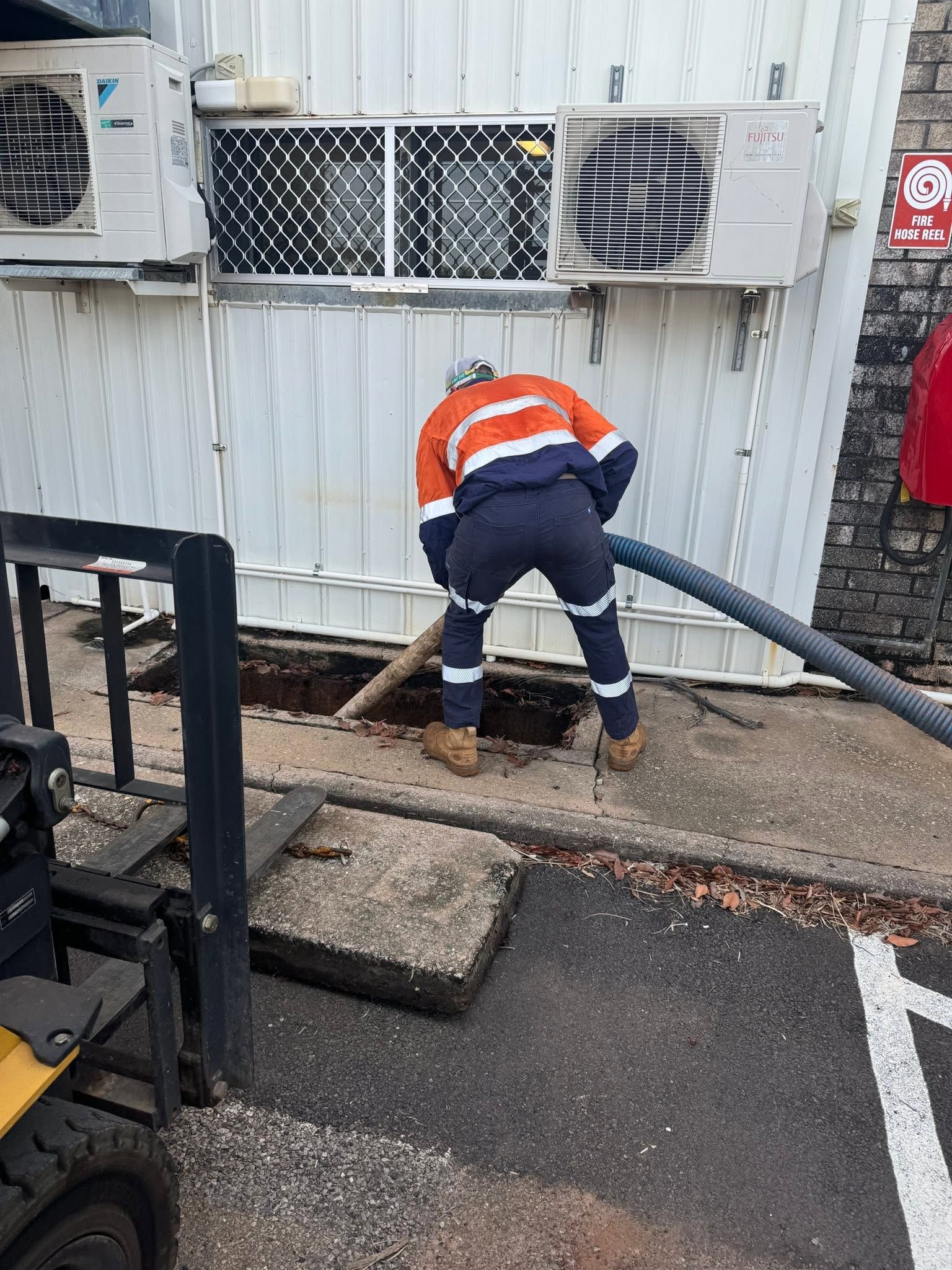
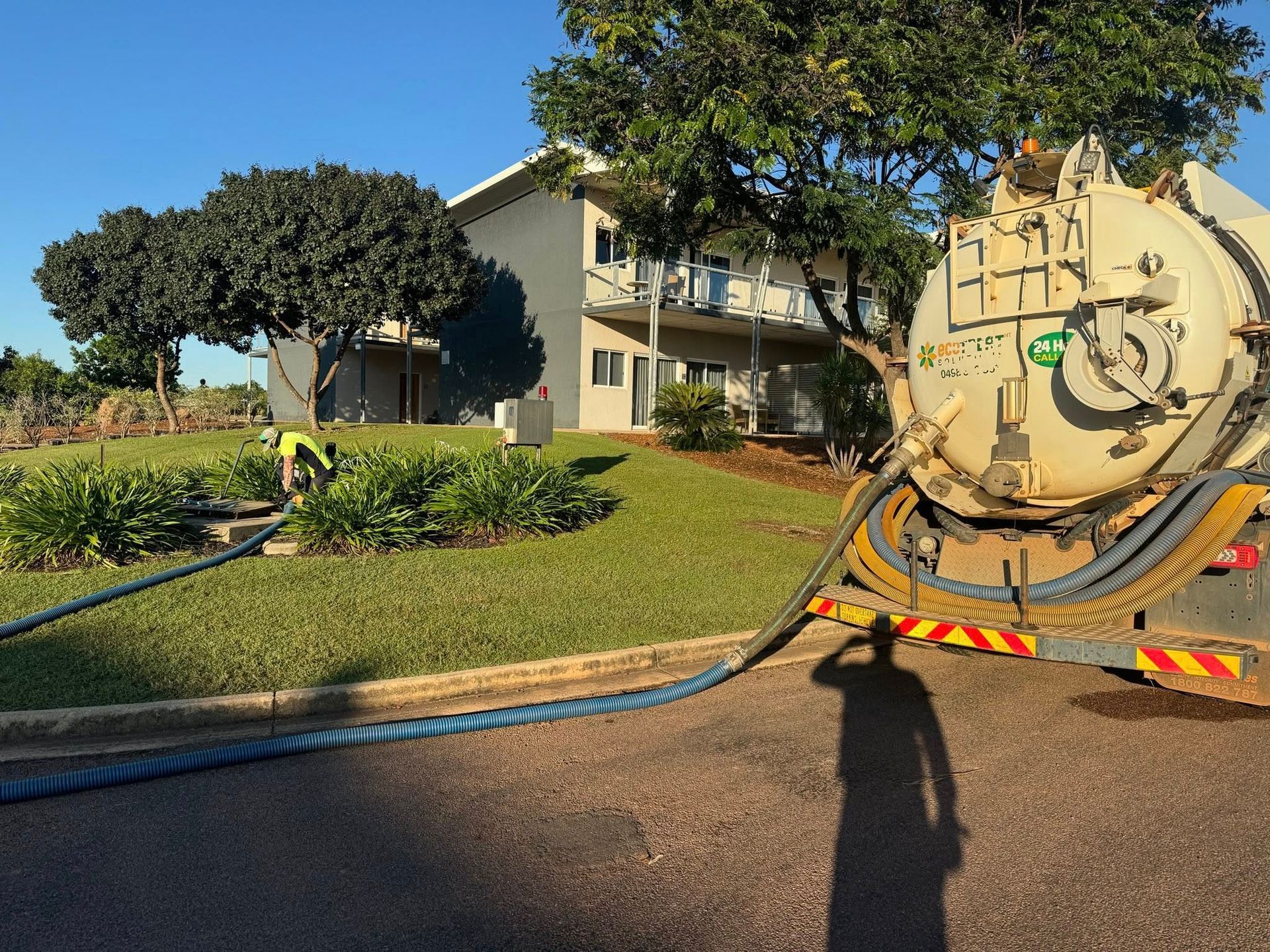
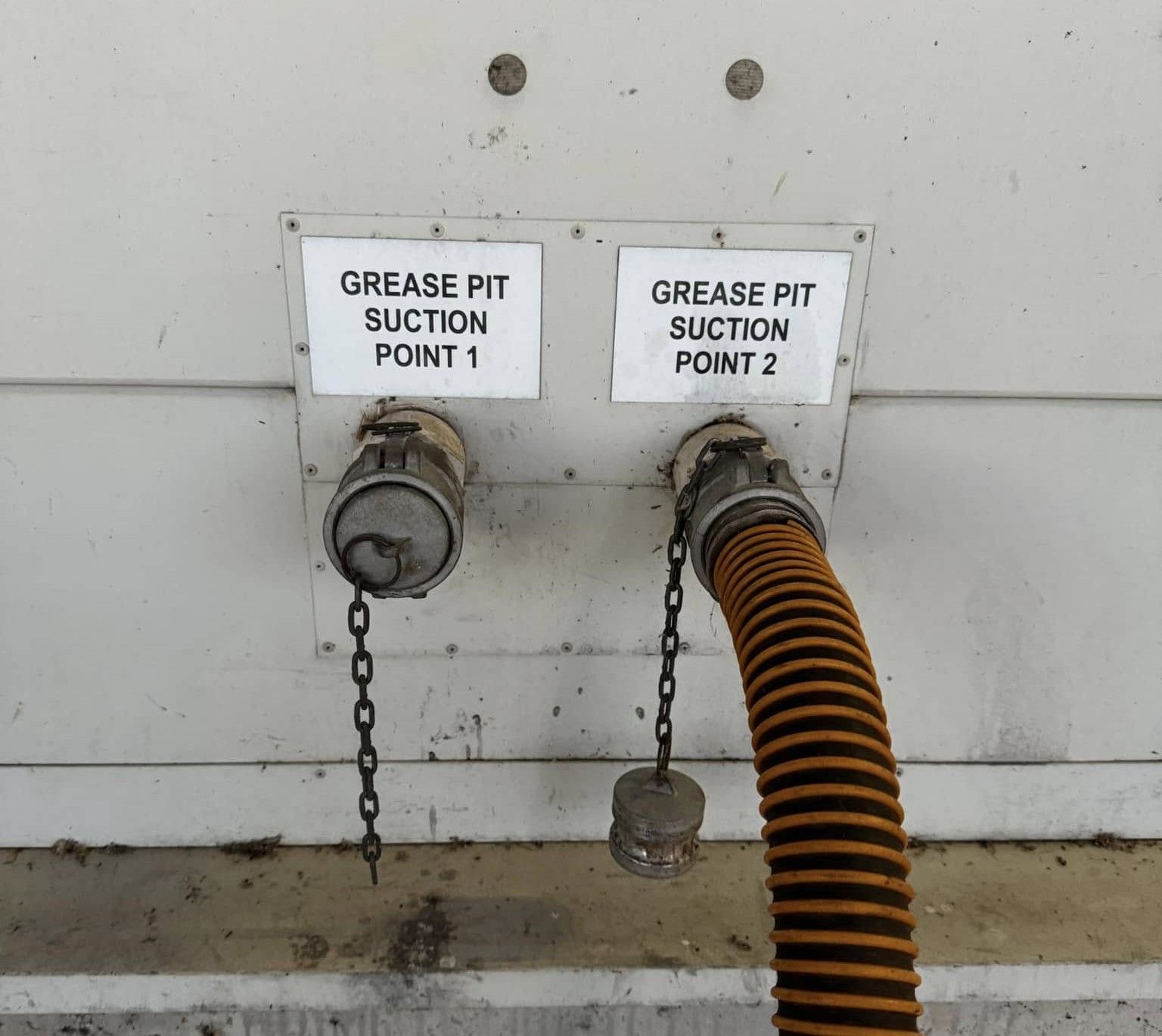
A compliant pump-out removes the entire contents of the trap, not just the floating grease on top. Power and Water requires the waste transporter to empty the whole trap and dispose of the waste in line with regulatory requirements (Power and Water). Skimming the surface leaves the sludge layer behind, so the trap fills again within weeks.
A thorough commercial grease trap cleaning service typically covers:
- Inspecting the trap's condition and how full it is before work starts
- Pumping out all grease, wastewater and settled solids
- Scraping and washing down the internal walls, baffles and fittings
- Transporting the waste to a licensed facility for lawful disposal
- Recording the service and flagging any damage or maintenance needs
That service record matters. It's your proof that the trap was serviced on schedule if a trade waste officer ever asks.
Treatment products catch owners out too. Some additives claim to break down grease and stretch out the time between pump-outs. In the NT, Power and Water must approve any additive before it goes into a grease arrestor, so check before you pour anything in.
Example: How a Busy Darwin Café Gets Caught Out
The following is an illustrative example, not a specific client.
A café in the CBD opens with a quarterly pump-out on its permit. For the first year that works, because it mostly serves coffee, pastries and salads. Then the owners add an all-day brunch menu with fried chicken, hash browns and hollandaise, and stretch trading into weekend evenings.
Nobody updates the service schedule. By month two of the next quarter, the dishwasher area drains slowly, and a sour smell hangs around the rear lane by mid-afternoon. On a busy Saturday, the floor waste near the pot sink backs up during the lunch rush, and the kitchen has to stop washing up until an emergency pump-out arrives.
The fix was simple: move to a six-weekly service to match the new menu. The lesson is broader. Your pump-out frequency should change whenever your menu, hours or covers change. The frequency on your permit only tells you the longest you can legally wait.
How Can Darwin Food Businesses Stay Ahead of FOG Compliance?
Staying compliant comes down to knowing your obligations and putting them on a schedule that runs without you chasing it. Here's the approach we recommend to Darwin kitchens:
- Find your permit. Check your Trade Waste Discharge Permit for your trap size and nominated pump-out frequency. If you can't find it, contact Power and Water's trade waste team.
- Set a recurring service. Book pump-outs at least as often as your permit requires, timed outside your peak trading hours.
- Review after any change. A new menu, longer hours or a jump in covers means your frequency probably needs to tighten.
- Keep every service record. File the report from each pump-out so you can show a clean history if anyone asks.
- Train your team. Scraping plates, wiping pans and using sink strainers all keep grease and solids out of the trap.
- Never pour cooking oil down the drain. Collect used oil separately for recycling or licensed disposal.
Larger venues often run more than one system on site. Pairing grease trap servicing with broader liquid waste management plans helps hotels, clubs and food manufacturers stay ahead of compliance across every system, from traps to septic tanks and oil separators.
The takeaway: your permit sets the longest you can wait, but your kitchen sets how often you actually need a pump-out. Pull out your permit this week, compare it against how hard your kitchen works now and lock in a schedule that matches.
Ecotreat Solutions NT provides local grease trap cleaning in Darwin and can assess your trap, recommend a realistic frequency and handle every service from there. Explore
our liquid waste services to see how we support commercial kitchens beyond grease traps.
Grease Trap Cleaning Darwin FAQs