Septic Tank Cleaning Darwin: What Every Property Buyer Should Check First
A septic system can be easy to miss during a property viewing, but if a Darwin or rural NT home is not connected to sewerage, it needs an on-site wastewater management system. Before you buy, find out what is installed, request approval and maintenance records, and arrange an appropriate inspection if anything is unclear.
A fresh coat of paint tells you little about what is happening underground. If a home is not connected to sewerage, it needs an on-site wastewater management system. Before buying, confirm what is installed and ask for its approval and maintenance records. If cleaning is due or the service history is unclear, professional septic tank cleaning in Darwin may be one part of your checks, but it cannot replace a full system assessment.
Why the Septic System Matters Before Buying
A property’s wastewater system affects how the home handles everyday water from toilets, bathrooms, kitchens and laundries. If it is damaged, poorly maintained or unsuitable for the property, the issue can mean repairs, replacement work or limits on how the site can be used. A system may also be buried or partly hidden, so a standard walk-through will not tell you its age, capacity or condition.
This matters particularly when you are looking at rural and regional NT homes, where connection to town sewerage may not be available. The NT Government says properties that are not connected to sewerage need a wastewater management system, which can include a septic tank, a secondary treatment system or another approved on-site option.
Before signing, add wastewater questions to your due diligence. Ask the seller or agent for the system type, location, installation or certification documents, service history, and details of any faults or repairs. If the paperwork is missing or inconsistent, seek advice from a licensed plumber and drainer or the relevant NT authority before assuming the system is compliant or fit for ongoing use.
First, Find Out Whether There Is a Septic System
To answer “Do I have a septic tank?”, start by checking the property’s documents rather than searching the yard. Look for wastewater approvals, building or plumbing records, site plans, previous inspection reports and service invoices. The seller, property manager or agent may know where the tank and land application area are, but ask for records to support that information.
You can also check whether the property is connected to a sewer service. If it is not, the NT Government says an on-site wastewater management system is needed. These systems may be a conventional septic tank or another type, such as a holding tank or treatment system, so don’t assume every buried lid belongs to a standard septic tank.
A site plan or previous maintenance record can help identify tank access points and the area where treated wastewater is managed. Never lift a septic lid or enter a tank yourself. Covers can be heavy or unsafe, and tanks can contain hazardous gases. Leave access and inspection work to qualified professionals.
How Does a Septic Tank Work?
A conventional septic system receives wastewater from a home and separates solids from liquid inside a tank. Heavier solids settle to the bottom as sludge, while fats and lighter material form a surface layer called scum. The liquid effluent then flows to a land application or disposal area for further treatment in the soil. System designs vary, and some use extra treatment components.
The tank is only one part of the arrangement. Pipes, baffles, access covers and the land application area all matter. A clean-looking tank does not by itself prove the whole system is functioning correctly, and a recent pump-out is not the same as a compliance certificate or a condition report. Ask an appropriately qualified person to assess the complete system if you need a view of its condition.
Do I Need Council Approval for a Septic Tank?
The approval process in the NT depends on the property’s location and the type and scale of the proposed system. Within a building control area, wastewater systems are regulated under the Building Act and must be installed and certified by appropriate professionals. Outside those areas, the NT Department of Health regulates wastewater systems under public and environmental health requirements.
That means “council approval” may not be the right description for every NT property. For example, outside building control areas, the NT Government requires notification for systems designed to treat more than 2,000 litres a day, while system design and installation still need certification. Requirements can depend on the system and proposed work, so buyers should confirm the rules that apply to the actual property with the relevant NT department or a licensed professional.
For an existing system, ask for documents showing what was approved, when it was installed and who certified the work. If you plan to renovate, add bedrooms or change how the property is used, check whether the existing system can accommodate the change before you commit. NT Government wastewater codes and guidelines set technical requirements for systems, and professionals designing or installing them must follow the applicable rules.
What Should You Check During Due Diligence?
A buyer’s first check is a paperwork and visual review, not a substitute for a professional assessment. Ask the seller or agent for the following information:
- The system type, approximate age, location and design or capacity details.
- Approval, installation and certification documents, where available.
- Recent pump-out, inspection and maintenance records.
- Any history of blockages, odours, overflows, repairs or replacement work.
- The location of the tank, inspection openings and land application area.
- Any known restrictions, easements or conditions affecting the system.
During a viewing, note strong persistent odours, unusually wet or lush ground over the disposal area, slow drains, gurgling plumbing or visible wastewater. These clues do not prove the system has failed, but they are reasons to ask further questions and arrange an assessment. Ecotreat Solutions NT’s guide to
the signs your septic tank needs cleaning describes common warning signs, though a buyer should still have suspected faults assessed on site.
When Does Septic Tank Cleaning in Darwin Make Sense?
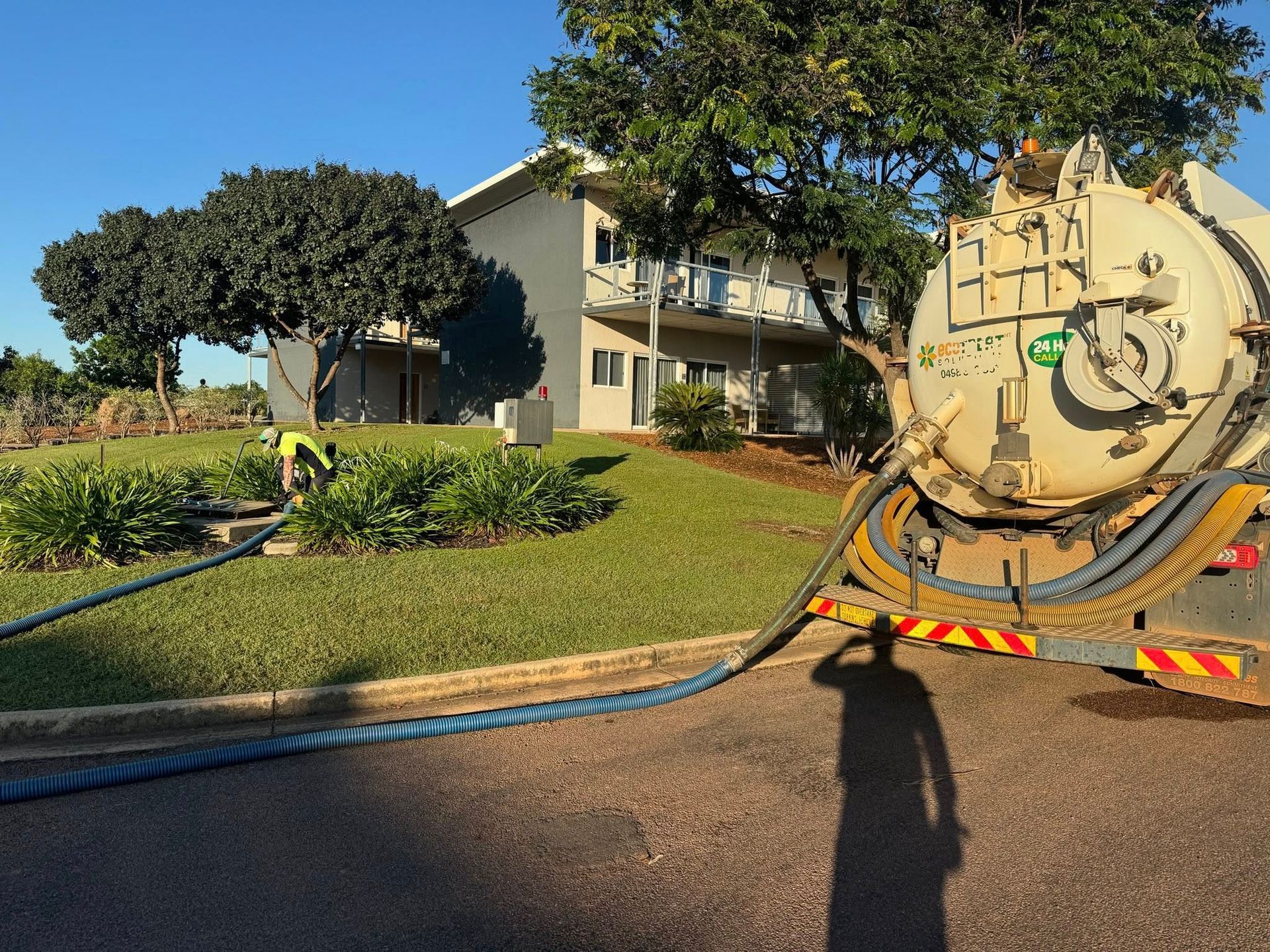
Septic tanks accumulate sludge and scum as they are used, so periodic servicing is part of routine ownership. The required interval varies with tank size, household use, system type and previous maintenance. Ask for dated service records rather than relying on a seller’s estimate that it was “done recently”. If cleaning is due, arrange professional septic tank cleaning in Darwin and ask for a written record of the work. At Ecotreat Solutions NT, we provide septic tank pumping and clean-outs for homes, businesses and rural properties across Darwin and the NT.
Warning signs such as slow drains, persistent odours, gurgling or pooling near the disposal area should prompt a closer look. A clean-out can remove accumulated contents, but it cannot repair a cracked tank, failed baffle, blocked pipe or failing land application area. For a pre-purchase decision, separate the question “When was it last cleaned?” from “Has the whole system been inspected and shown to be in suitable condition?”
What a Clean-Out Can and Cannot Tell You
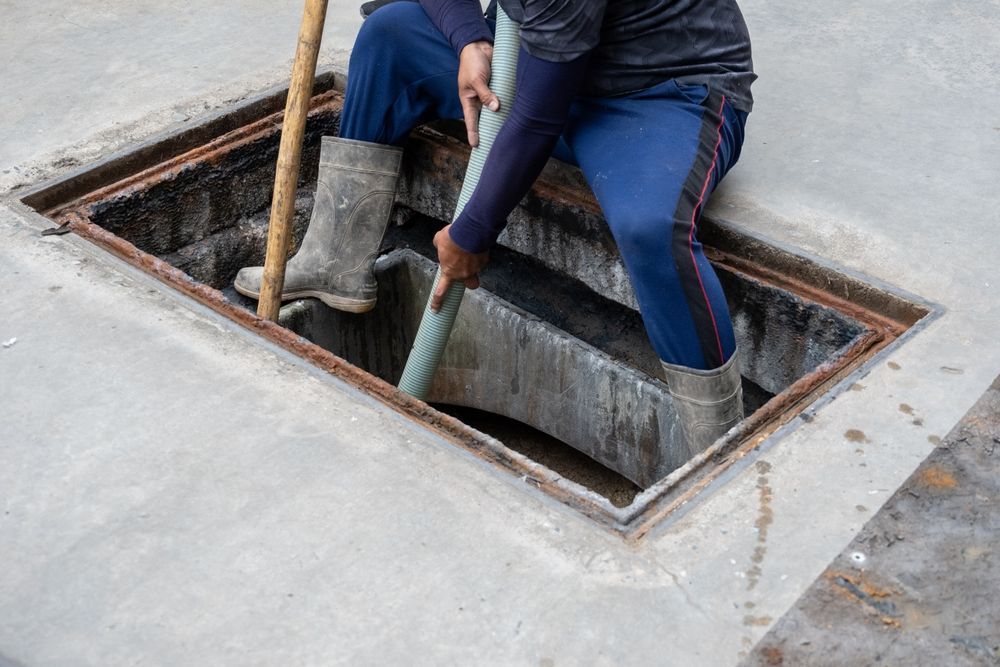
Professional septic tank cleaning involves more than removing waste. Ecotreat describes its service as including pump-outs and clean-outs, sludge removal, waste transport and servicing for different system types. A service can also provide an opportunity to identify visible concerns, but the scope should be confirmed with the provider and should not be treated as a formal compliance assessment unless that is specifically included.
If a clean-out is recommended before settlement, clarify who will arrange it, what it includes, and whether you will receive a service record. For a fuller explanation of the process, read
our full service breakdown. If the inspection raises broader wastewater concerns, an appropriately qualified contractor can help explain the next steps, while the relevant authority can clarify approval requirements.
A Simple Buyer’s Checklist
Before you make an offer unconditional, establish whether the home connects to sewerage or relies on an on-site system. Request the records, identify which NT approval pathway applies, and ask a suitably qualified professional to inspect the tank and its associated components if the history or condition is uncertain. If the system needs work, get written advice and a quote so you can understand the likely scope before proceeding.
The takeaway is straightforward: a pump-out is useful maintenance, but it does not replace records, a system assessment or confirmation of regulatory requirements. Treat the wastewater system as part of the property’s essential infrastructure and make its condition clear before purchase.
For advice about a septic clean-out or servicing history,
contact our team at
Ecotreat Solutions NT and ask what information or service may suit the property. Our team provides septic tank cleaning in Darwin for residential, commercial and rural properties. We're also able to assist with
liquid waste management in Darwin.
FAQs