Why Ignoring Early Septic Tank Issues Leads To Costly Repairs
Septic systems are quietly efficient until they're not. For Darwin homeowners, landlords and property managers, the distance between a minor inconvenience and a major repair bill can be surprisingly short, and the difference usually comes down to how quickly a warning sign gets attention. Routine septic tank cleaning in Darwin is one of the most straightforward ways to stay ahead of problems before they compound into something far more disruptive.
What Slow Drains Are Actually Telling You
A slow-draining sink or shower might seem like a minor plumbing issue, but in a property on a septic system, it's often the first sign that something is wrong underground. When the tank is approaching capacity or the drain field is beginning to fail, drainage backs up inside the home long before any visible damage appears outside.
Homeowners in this situation often notice:
- Drains in multiple rooms slowing down around the same time.
- Gurgling sounds coming from toilets or sinks after water is used.
- Water pooling near floor drains or backing up unexpectedly.
Catching this early gives you the best chance of a straightforward fix.
The Smell That Should Never Be Ignored
Foul odours near the tank, in the yard or around drains inside the home point to one thing: gases and waste are escaping somewhere they shouldn't. This is more than a nuisance issue. Hydrogen sulphide and methane, both byproducts of septic decomposition, create genuine health risks if they build up in enclosed spaces.
Most cases of persistent septic odour come down to:
- A tank that has reached or exceeded its holding capacity.
- Damaged or deteriorating baffles that no longer contain waste correctly.
- Blocked venting that forces gases back through internal plumbing.
A persistent odour is a reliable sign that the system needs professional attention.
How a Small Crack Becomes a Large Problem
Septic tanks are typically constructed from concrete, fibreglass or polyethylene, and all of these materials are vulnerable to damage over time. In Darwin's climate, ground movement during the wet season can stress tank walls and joints in ways that aren't immediately obvious. A hairline crack lets in groundwater, disrupts the biological process inside the tank and can allow partially treated effluent to migrate toward the surface.
Structural issues that go undetected long enough tend to result in:
- Tank collapse or significant subsidence in the area above the tank.
- Contamination of surrounding soil and, in some cases, nearby water sources.
- Repairs that require full excavation rather than simple servicing.
Structural damage identified early is almost always cheaper and simpler to resolve.
Why Lush Grass Above the Drain Field Is a Warning Sign
It sounds counterintuitive, but unusually green or fast-growing grass directly above a septic drain field often signals that untreated effluent is saturating the soil. Healthy drain fields distribute treated liquid evenly and below the surface. When they're failing, waste rises and vegetation responds to the nutrient load with visible vigour.
Beyond the grass itself, a failing drain field may also produce:
- Soft or spongy ground that holds moisture in dry weather.
- Visible wet patches or surface water that appears without recent rain.
- A persistent odour in the yard even when no other plumbing issues are obvious.
Surface changes like these are worth investigating before the underlying issue develops further.
The Compounding Cost of Delayed Maintenance
This is where the financial case becomes clear. Scheduling septic tank cleaning in Darwin on a regular basis costs a fraction of what emergency repairs or system replacement demand. A pump-out and inspection on a well-maintained system is a manageable expense. A failed drain field, a collapsed tank or a contamination event is not.
Property owners who put off maintenance often find themselves facing:
- Emergency pump-outs, which carry significant after-hours or urgent-response premiums.
- Drain field restoration or replacement, which often involves earthworks and soil remediation.
- Internal repairs caused by sewage backflow into the home itself.
Routine servicing is consistently the more affordable path.
What Heavy Water Use Does to an Already Stressed System
High water consumption accelerates every septic problem that already exists. Excess water flushes through the tank before solids have time to break down properly, pushes partially treated effluent into the drain field prematurely and reduces the biological activity the system relies on to function. During Darwin's wet season, this effect compounds as groundwater levels rise and the drain field's absorption capacity drops.
Daily habits that put unnecessary strain on a struggling system include things like:
- Running multiple high-volume appliances at the same time, such as dishwashers and washing machines.
- Failing to spread laundry loads across the week during periods of heavy use.
- Using the septic system as a disposal point for cooking oils, food scraps or chemical cleaners.
Reducing the load buys time, but it is not a substitute for professional assessment.
When DIY Inspection Has Real Limits
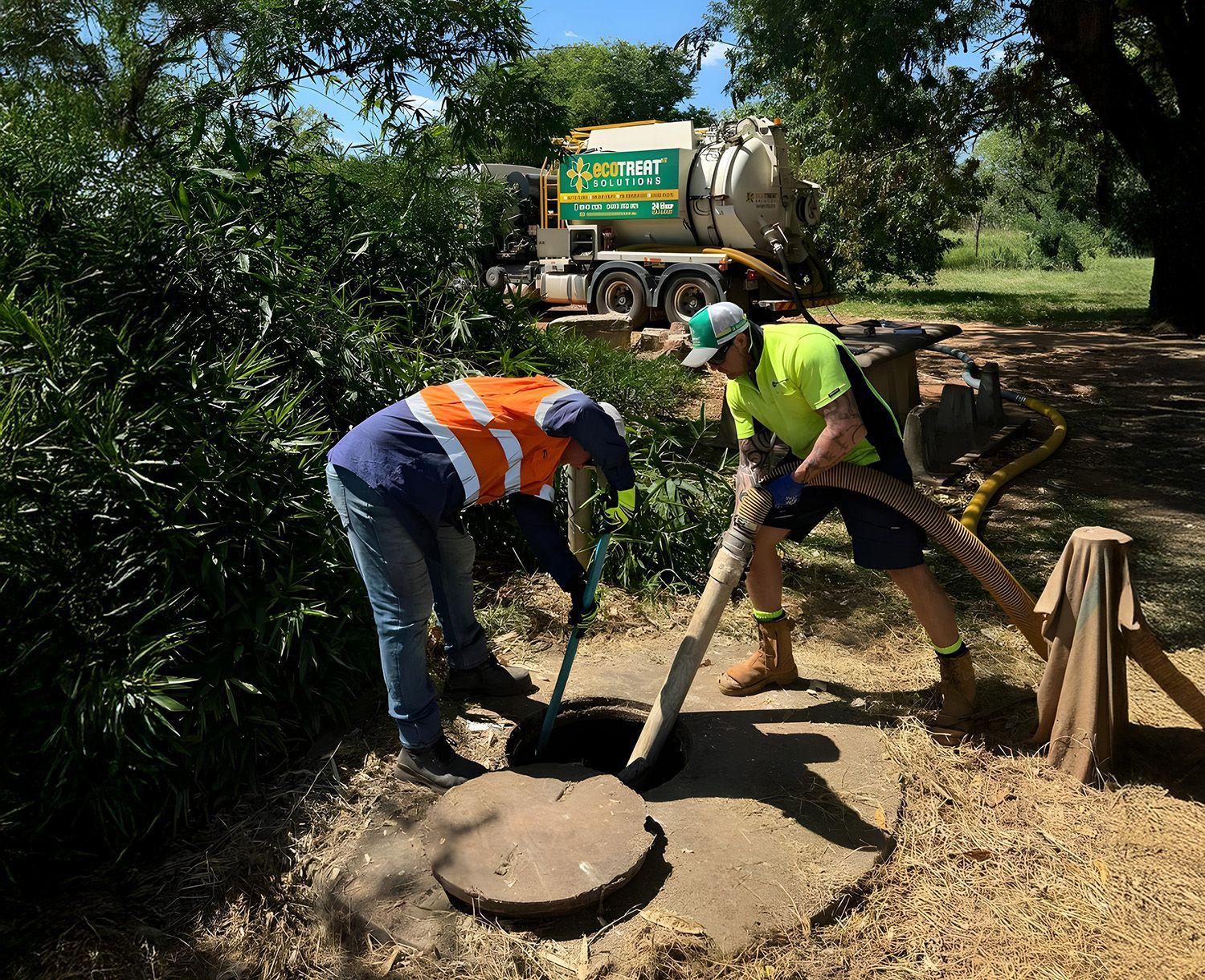
Some checks can be done from the surface: looking for wet patches, noticing odours, monitoring drainage behaviour inside. But the components that matter most, the baffle condition, the scum and sludge layers, the integrity of the tank walls, require proper equipment and trained eyes to assess accurately. Lifting a tank lid without knowing what to expect is also a genuine safety risk given the gases involved.
Booking a professional inspection makes particular sense when:
- A property hasn't had a documented service in the past two to three years.
- Signs have appeared after a wet season, when ground movement and saturation are most likely to cause damage.
- A property is changing hands and the system's history and condition may be unknown.
Knowing the limits of a surface check is part of managing the system responsibly.
Protecting Your Property for the Long Term
We at Ecotreat Solutions NT work with homeowners, landlords and property managers across Darwin and the surrounding region to keep septic systems in reliable, compliant condition. We understand the demands Darwin's climate places on these systems, and we've seen first-hand how quickly a neglected issue can turn into a costly and disruptive repair.
Whether you've noticed an early warning sign or you're simply overdue for a service, we offer professional septic tank cleaning in Darwin alongside thorough inspections that give you a clear picture of where your system stands. Get in touch with our team to book a service or ask about what's involved, because the best time to address a septic problem is always before it gets worse.